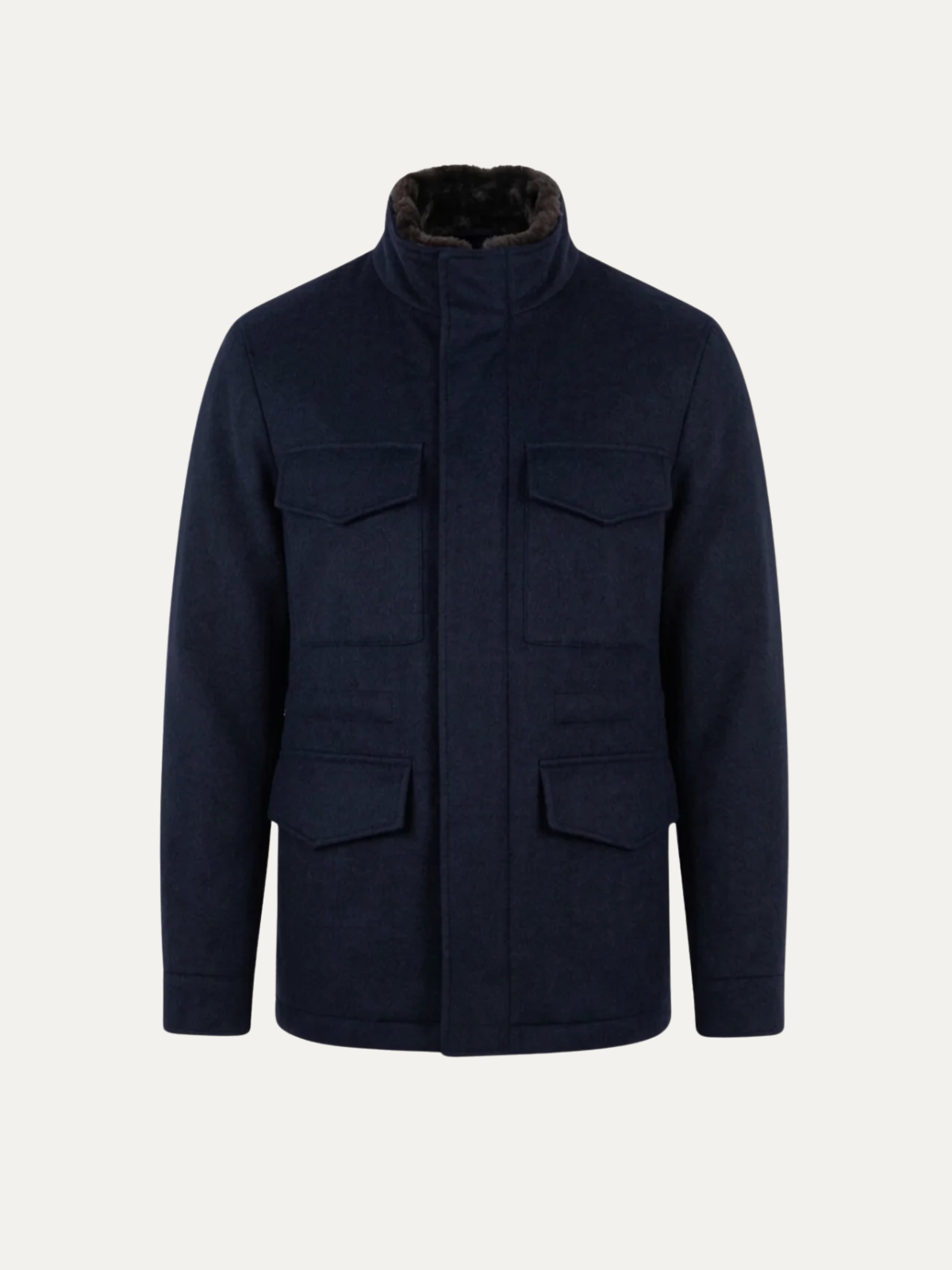
A curated guide to the Alpine winter: legendary resorts, grand hotels and the finest tables after the last run, from St. Moritz to Zermatt.
LUSCARO
The Alpine Season: A Gentleman's Guide
From St. Moritz to Zermatt: where to stay, dine and celebrate this winter
Some resorts are about the skiing. The great ones are about the whole day. A first run on fresh corduroy, a long lunch in a wooden hut with the sun on your face, a glass of champagne as the light turns pink on the peaks, and an evening that ends somewhere you will talk about for years.
These are the five Alpine resorts we return to every winter. Each has its own character, from the old-world glamour of St. Moritz to the quiet wealth of Gstaad and the raw energy of Kitzbühel in race week. For each, we have chosen the hotels worth staying in, the tables worth booking, from simple mountain huts full of history to the finest dining rooms in the Alps, and the après-ski, clubs and events that define the season.
St. Moritz
The original winter resort
St. Moritz did not follow the idea of the winter holiday. It invented it. More than 150 years later, it still carries that confidence. The Engadin light is famously clear, the frozen lake becomes a stage for polo and horse racing, and the town moves between sporting tradition and unapologetic glamour.
Where to stay
Badrutt's Palace Hotel is the heart of St. Moritz society. Its turreted silhouette above the lake has defined the town for well over a century, and its lobby, Le Grand Hall, is where the season's guests meet for tea, cocktails and to be seen. Stay here if you want to be in the middle of everything.
Kulm Hotel St. Moritz is the quieter alternative with an even longer history. It was here that the very first winter guests stayed, and the hotel is closely tied to the Cresta Run and the bobsleigh tradition that made the town famous. Expect old-school elegance, a superb spa and a slightly more discreet crowd.
Where to eat
Hanselmann is the simplest pleasure in town and one of the most essential. This confectionery on Via Maistra has been serving coffee and cakes for generations. Order a slice of Engadiner Nusstorte, the local caramel and walnut tart, and watch St. Moritz walk past the window. It is the most authentic taste of the Engadin you can buy.
Chesa Veglia is a seventeenth-century farmhouse turned into one of the most atmospheric restaurants in the Alps. Low wooden ceilings, candlelight and open fires set the tone. The building houses several restaurants under one roof, from relaxed wood-fired pizza to a refined grill, so it works for a casual Tuesday as well as a long Saturday dinner.
Après-ski and after dark
The afternoon belongs to the sunny terraces of the Corviglia, where long lunches roll into the late afternoon with champagne and a view across the lakes. Once night falls, the place to be is the King's Club at Badrutt's Palace, the town's legendary nightclub and the setting for many of the season's best nights. The Dracula Club, founded by Gunter Sachs in 1974, remains strictly members only, which is exactly what keeps the legend alive.
The moments
The Snow Polo World Cup brings high-goal polo to the frozen lake from 22 to 24 January 2027, and the weekend is considered the social highlight of the winter. Two weeks later, White Turf celebrates its 120th anniversary with international horse racing and skijoring on the ice. The racing Sundays are 7, 14 and 21 February 2027. Book a table in a lounge, dress warmly but well, and plan to stay until the last race.
Courchevel 1850
French savoir-vivre at altitude
Courchevel celebrates its 80th anniversary this winter, and it has never looked better. Set at the top of Les 3 Vallées, the largest connected ski area in the world, it offers serious skiing straight from the door. Yet what makes it unique is the way the French art of living has been carried up the mountain: grand chalets, more Michelin stars than almost any village in the world, and a sense of occasion that runs from the first lift to the last dance. The season runs from 4 December 2026 to 18 April 2027.
Where to stay
Cheval Blanc Courchevel is the most refined address in the resort. With only a few dozen rooms and suites, ski-in, ski-out on the Bellecôte slope, it feels like a private house with impeccable service. The design is calm and contemporary, and the spa is among the best in the Alps.
Les Airelles is the opposite in mood and just as memorable. Its fairytale façade, painted ceilings and Austro-Hungarian grandeur make it the most theatrical hotel in Courchevel. Families love it for its legendary hospitality, and its own ski room leads straight onto the piste.
Where to eat
Le Chalet de Pierres, right on the Verdons slope, is the classic Courchevel lunch. A stone and wood chalet with a roaring fire, a terrace in full sun and a famous dessert buffet. It is not cheap and it is not trying to be modern, which is exactly its charm. This is where generations of Courchevel regulars have taken off their skis for two hours.
Le 1947 at Cheval Blanc is Yannick Alléné's intimate dining room, with only a handful of tables and a menu built around his work on sauces and extractions. It is one of the most celebrated restaurants in France. Reserve well ahead and keep the evening free.
Après-ski and after dark
After skiing, the terraces around the Croisette fill up as the sun disappears behind the Saulire, and Courchevel slowly changes into evening wear. Later, Les Caves de Courchevel is the place where the night ends. Open since the 1960s, the club is set in a vaulted cellar and has hosted the resort's most famous guests for decades. It starts late, and it ends very late.
The moments
On 22 December 2026, the Women's Alpine Ski World Cup returns to the Émile Allais stadium with a night slalom under floodlights. It is a rare chance to watch the world's best skiers race in the evening, and the perfect start to a Christmas week in the Alps.
Gstaad
Quiet wealth in a farming village
Gstaad is the most understated of the great resorts, and that is precisely its appeal. By law, every building must be built in the traditional chalet style, so the village still looks like a mountain hamlet, even if the chalets behind the wooden façades are among the most valuable in Europe. The skiing is gentle rather than extreme. People come for the calm, the privacy and the feeling that nobody needs to prove anything.
Where to stay
Gstaad Palace has watched over the village from its hill since 1913 and is still run by the same family. Its turrets are the symbol of Gstaad, and its Lobby Bar is known as the village's living room. Open from 15 December 2026 to 7 March 2027, it is the place for anyone who wants to experience Gstaad in its most classic form.
The Alpina Gstaad is the contemporary counterpart: warm wood, modern art and a quieter, more private atmosphere. It is a beautiful choice for those who prefer understated design over grand tradition, and it is home to some of the best dining in the region.
Where to eat
A fondue night on the Eggli is the simplest and most memorable evening in Gstaad. You ride up the mountain after dark, settle into the warmth of the restaurant with a pot of cheese from the Saanenland, and look down on the lights of the village. It is the kind of evening that reminds you why Gstaad has stayed so loyal to its farming roots.
Megu at The Alpina brings refined Japanese cuisine into an Alpine setting. Clean flavours, exceptional produce and a striking room make it the perfect contrast to a day of cheese and mountain air. It is one of the most sought-after tables in Gstaad during the high season.
Après-ski and after dark
Afternoons end on the promenade, a short, car-free stretch of boutiques and cafés, before guests head back up to the Palace for a drink by the fire. The night belongs to the GreenGo, the Palace's nightclub since 1971. Set beneath the hotel in a former swimming pool, it opens from Thursday to Saturday at 11:30 pm with an elegant dress code. It is one of the few places in the Alps where three generations dance on the same floor.
The moments
Fifteen minutes down the valley, the International Balloon Festival in Château-d'Œx fills the winter sky with dozens of hot-air balloons from 23 to 31 January 2027. Book a flight at sunrise and see the Saanenland from above. It is one of the most magical experiences of the Swiss winter.
Kitzbühel
Tyrolean tradition with a racing heart
Kitzbühel is the most lively of the great resorts. It is a real medieval town, with painted façades and cobbled lanes, rather than a village built for tourism. Its identity is shaped by one mountain and one race: the Hahnenkamm and its legendary Streif, the most feared downhill in the world. Come in January and the whole town turns into the biggest party in the Alps. Come in March and you will find wide, sunny slopes and long lunches in wooden huts.
Where to stay
Hotel Tennerhof is a former farmhouse on the edge of town that has become one of the most charming addresses in Tyrol. Wooden rooms, a calm garden and a renowned restaurant give it the feel of a country house rather than a hotel. It is ideal for those who want Kitzbühel's energy within reach, but not outside the window.
Stanglwirt in Going, about fifteen minutes away beneath the Wilder Kaiser, is an institution. This family-run organic resort combines Tyrolean tradition, its own Lipizzaner stud, and a famous wellness area. During race week, its legendary Weisswurst party draws celebrities and racers alike.
Where to eat
A traditional mountain hut on the Hahnenkamm is where every Kitzbühel day should pause. Choose one of the old wooden huts on the slopes, order a Kaspressknödel soup or a Kaiserschmarrn, and sit outside with the view across to the Wilder Kaiser. It is simple food, made the way it has always been made, and it is the soul of skiing in Tyrol.
The restaurant at Tennerhof is the refined counterpart. The kitchen takes Tyrolean products and classic Alpine dishes and elevates them with a lightness and precision that has made it one of the best tables in the region. Book the chef's menu and let the evening unfold slowly.
Après-ski and after dark
Kitzbühel's nights start early and end late. The Londoner, a small and crowded pub in the old town, has been the unofficial meeting point of skiers, racers and visitors for decades. It is loud, unpretentious and part of the Kitzbühel ritual. Afterwards, the clubs in the old town keep going well into the morning, especially during race week.
The moments
The 87th Hahnenkamm Races take place from 18 to 24 January 2027, with the Super-G on Friday 22 January, the famous downhill on the Streif on Saturday 23 January and the slalom on Sunday 24 January. Tickets are only sold in advance, and hotels fill up months ahead. If you go, go for the full weekend: the race, the parties and the unforgettable atmosphere of a town completely devoted to skiing.
Zermatt
Beneath the Matterhorn
There is no arrival in the Alps quite like Zermatt. The village is car-free, so you leave the world behind at Täsch and arrive by train, then by electric taxi or horse-drawn sleigh. Above everything stands the Matterhorn, impossibly sharp and always in view. The skiing is high and reliable, reaching well above 3,800 metres, and on a clear day you can ski across the border to Cervinia for lunch in Italy.
Where to stay
The Omnia sits on a rock above the village and is reached through a tunnel and a lift cut into the mountain. Inside, the design is calm and modern, inspired by American mountain lodges, with large windows framing the Matterhorn. It feels like a private retreat above the bustle of the main street.
Riffelalp Resort 2222m is for those who want to wake up on the mountain itself. Reached by the Gornergrat railway, it sits at 2,222 metres with an uninterrupted view of the Matterhorn. In the evening, when the day skiers have gone, the silence up here is extraordinary.
Where to eat
Chez Vrony in the hamlet of Findeln is the most famous mountain restaurant in Zermatt, and it deserves its reputation. The old wooden house sits on a sunny slope facing the Matterhorn. The menu is honest and local, with dried meat from their own cattle, simple pasta and excellent cakes. Arrive early, claim a deckchair on the terrace and do not plan to ski much afterwards.
After Seven at the Backstage Hotel is the place for a serious dinner. Chef Ivo Adam's creative cuisine is served in a dramatic, contemporary room in the centre of the village. It is playful and precise, and it shows how far Alpine fine dining has come.
Après-ski and after dark
On the last run down to the village, the bars along the slopes fill with skiers in boots and music in the air. Hennu Stall, a small hut above the village, is the classic final stop before the descent. In the evening, the cellar bars and lounges along the Bahnhofstrasse keep the atmosphere going, more relaxed than Courchevel and more international than Kitzbühel.
The moments
In spring, from 6 to 10 April 2027, Zermatt Unplugged turns the village into a stage for acoustic music, with more than 130 concerts on stages in the village and up on the mountain. Combine it with spring skiing on the glacier and long, sunlit afternoons, and you have the most relaxed way to end the season.
When to go and what to pack
Each part of the winter has its own character. Christmas and New Year are the most glamorous weeks, with every hotel full and every table booked. January belongs to the big events, from the Hahnenkamm to snow polo on the lake in St. Moritz. February brings the best snow and White Turf. March is the connoisseur's month: long days, quieter slopes and lunch in the sun. For the most popular weeks, book hotels and restaurants months in advance.
The Alpine wardrobe is built on contrast. On the mountain, performance comes first. In the village, the rules change. Pack a few pieces that move easily from day to night: a fine cashmere knit to wear under a jacket or on its own by the fire, dark denim that holds its shape after hours in the cold, a tailored overcoat for the walk to dinner, and one sharper look for the evening at the Palace or the club. In the Alps, the best-dressed man is rarely the most conspicuous. He is the one who looks equally at home in a mountain hut at noon and a grand hotel at midnight.
Discover our collection, made for days like these.
Sources
- Snow Polo World Cup St. Moritz 2027, stmoritz.com
- White Turf St. Moritz 2027, stmoritz.com
- St. Moritz winter events 2027, Kempinski
- Winter events in Courchevel, courchevel.com
- Women's World Cup Courchevel 2026, Les 3 Vallées
- GreenGo Club, Gstaad Palace
- Gstaad winter guide 2026, Haute Living
- Balloon Festival Château-d'Œx 2027, Swissinfo
- 87th Hahnenkamm Races, Tirol
- Hahnenkamm tickets 2027, HKR Kitzbühel
- Zermatt Unplugged 2027, zermatt.swiss
EXPERIENCE
PREMIUM SUEDE